Best Youth Soccer Cleats for Wide Feet: How to Find a Pair That Won’t Pinch Before the Next Growth Spurt
Last Updated on November 14, 2026 by
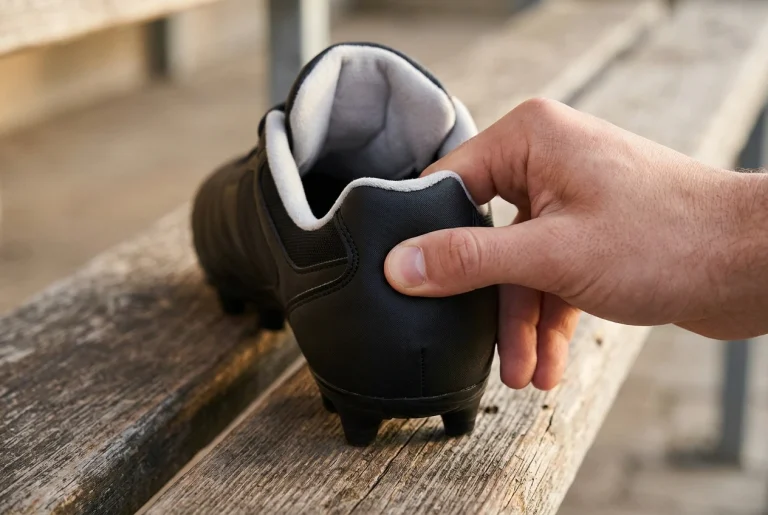
Your kid comes off the field and pulls a cleat off with a wince. Maybe the little toe is red, or the sides of the foot have pressure marks. Sometimes the feet really are wide. Other times the cleat is just the wrong size or the wrong shape, and a “wide” version won’t fix it. This guide covers how to tell which, how to check a pair at home, and what to look for when you shop for the best youth soccer cleats for wide feet.
How to tell if your kid has wide feet or just the wrong size
Start with the symptoms, because they point in different directions. Sore or blackened toenails and toes pressed against the front of the cleat usually mean the pair is too short. Pinching along the sides, a red mark at the base of the little toe, or an upper that bulges outward points to width.
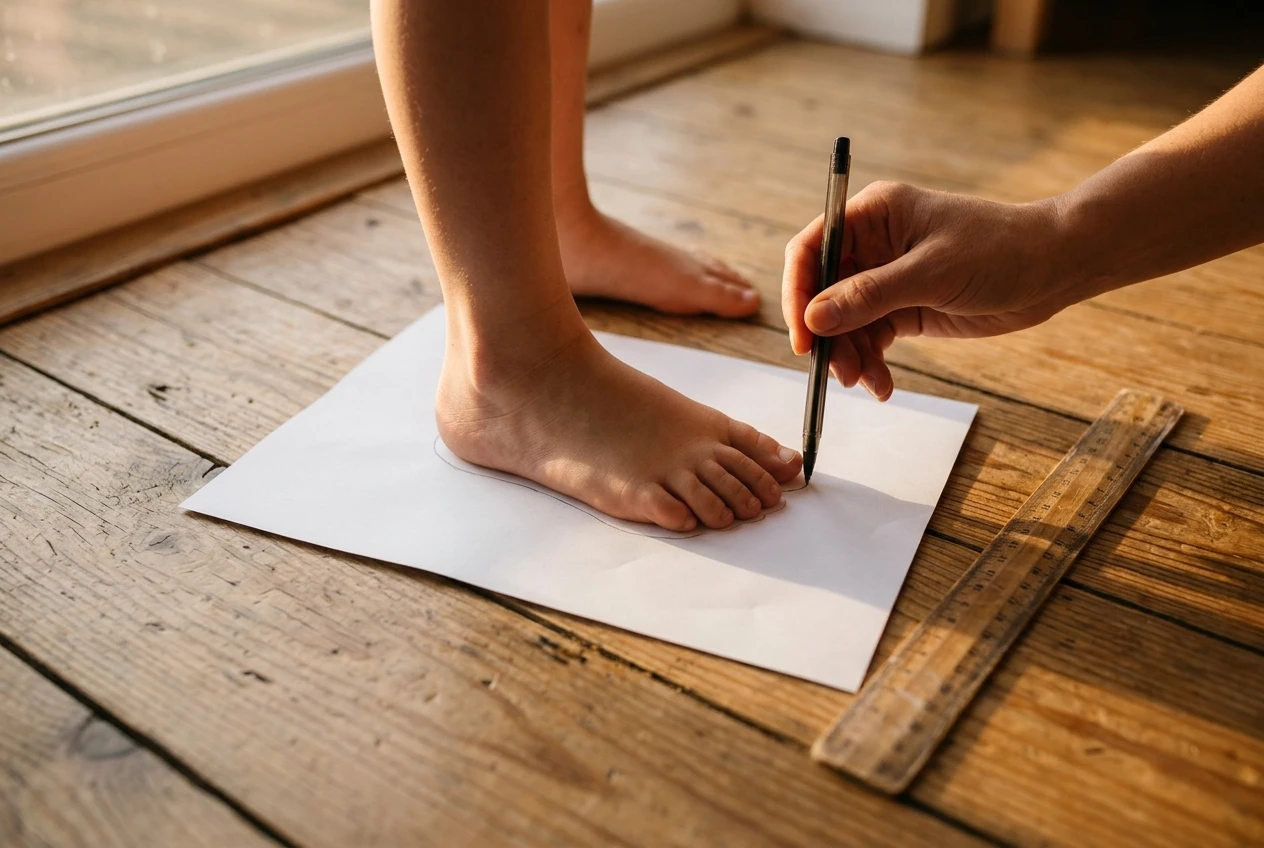
Then measure instead of guessing. Have your child stand on a sheet of paper with their weight fully on the foot, then trace around it with the pen held straight up. Do this in the evening, when feet are at their largest, and trace both feet, since they are rarely identical. Measure heel to longest toe for length, and across the widest part of the ball of the foot for width. Compare both numbers to the size chart for the specific cleat you are considering, because charts differ between brands.
A shoe store with a foot-measuring device can also read width for you. Even if you buy online afterward, you walk away with a number rather than a hunch.
One more clue: if ordinary sneakers fit lengthwise but always feel tight across the middle, wide feet are the likely cause. Your child’s regular shoes are a useful reference for the cleat decision.
The living-room fit test: what to check before the cleats touch grass
Do this indoors, on a clean floor, so the cleats stay returnable. Check the retailer’s return policy before you order, and keep the packaging.
- Use the right socks. Your child should wear the socks they play in. Thin dress socks make almost any cleat feel roomier than it will on game day.
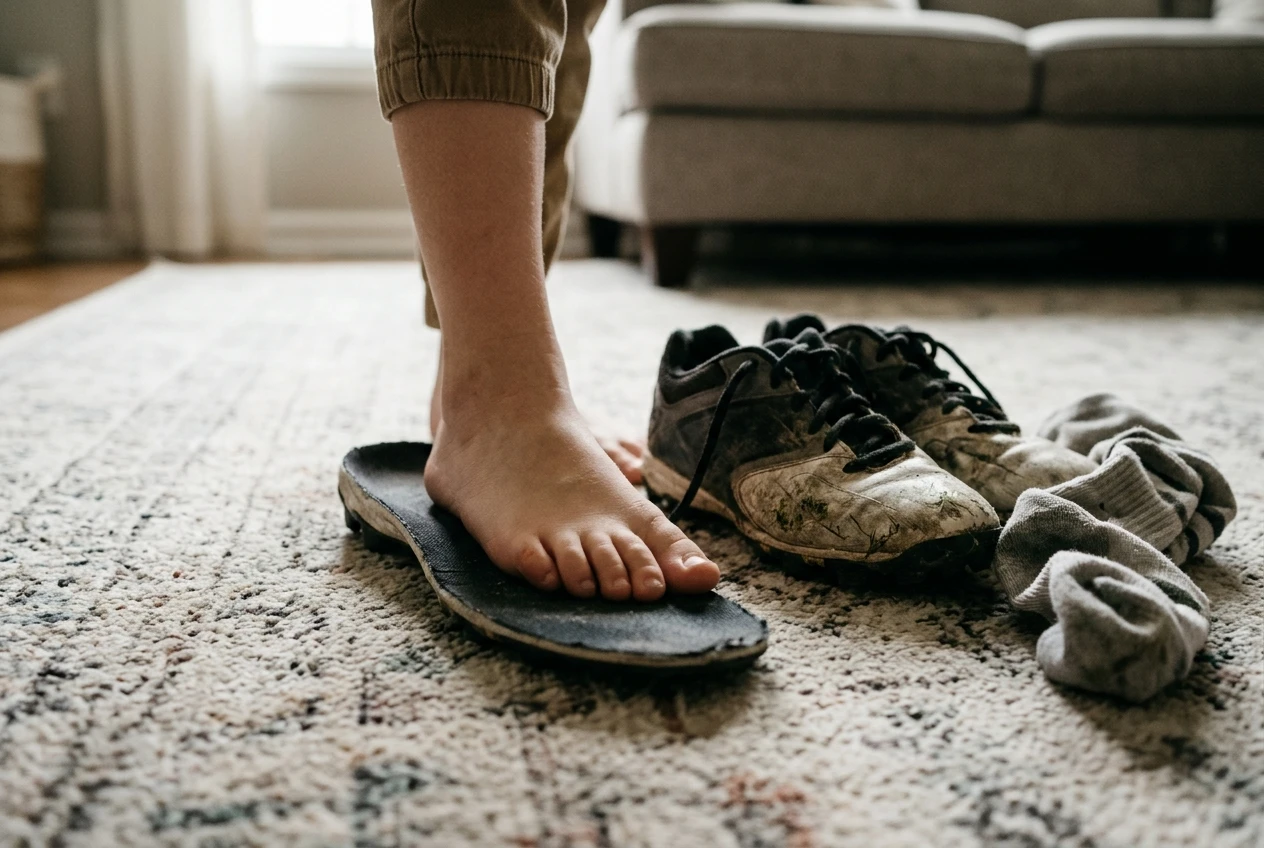
- Pull the insole out. Most cleats have a removable insole. Stand your child’s bare foot on it. If the foot spills over the edges at the sides, the cleat is too narrow, no matter what the box says.
- Lace up fully, then stand. Look for about a thumb’s width of space past the longest toe. Press along the outside edge: the little toe should not push against the upper, and the upper should not bulge over the edge of the sole.
- Have them move. Ask your child to walk, jog on the spot, crouch and push off as if sprinting. The heel should stay put, and the toes should not slam into the front.
- Watch their face. Kids often say a cleat is “fine” because they want the new pair. A wince on the push-off tells you more than the answer does.
If you find a pressure point in the living room, expect it to hurt more after ninety minutes of running. Send those back.
What gives a wide foot room: toe box shape, upper material and stretch
Three features matter most, and you can check all of them on a product page or in person.
Toe box shape. A rounded, roomy front gives the toes space to spread. A sharply tapered front squeezes the little toe inward. Speed-focused cleats tend to be cut slimmer for a snug feel, while many classic-style designs are roomier. That is a tendency, not a rule, so judge each model by its own photos and reviews from parents of wide-footed kids.
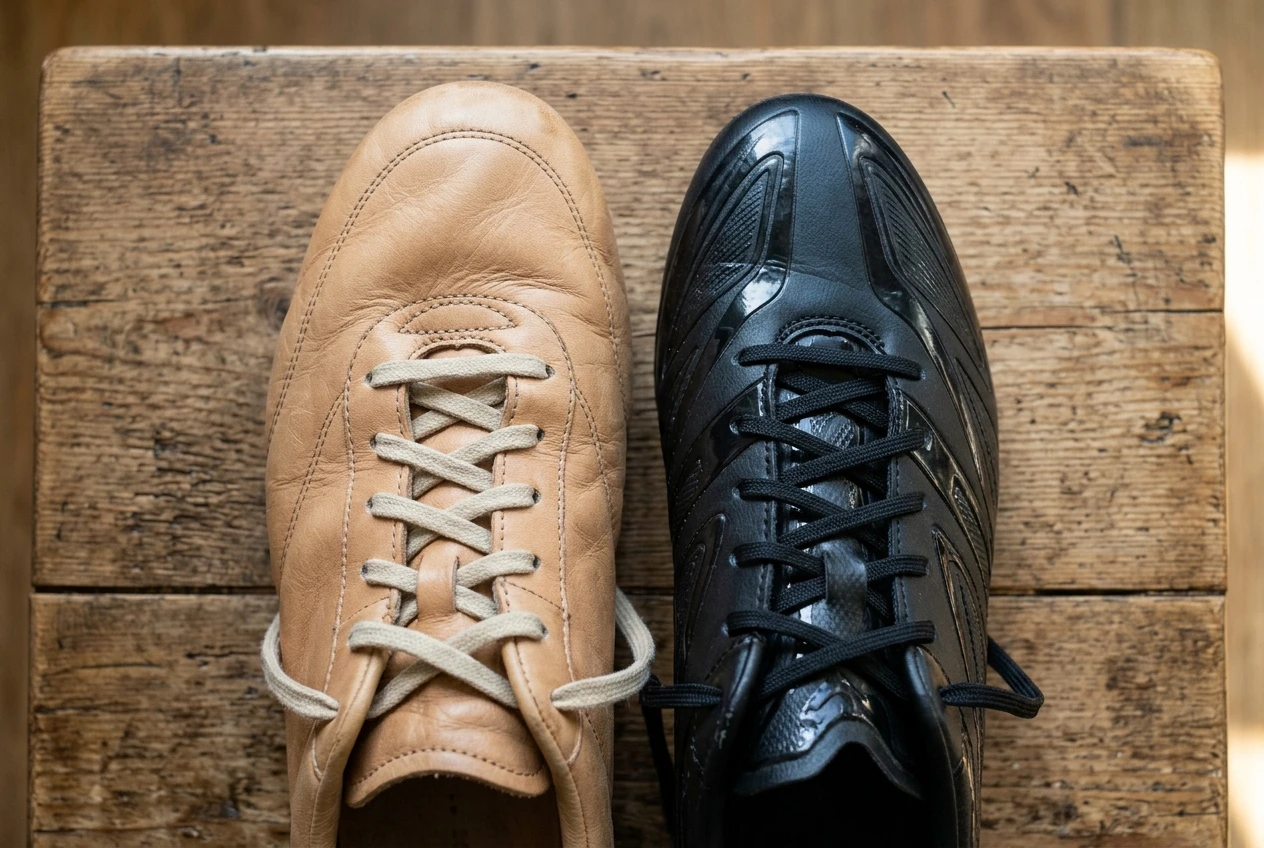
Upper material. Leather molds to the foot over time and gives the most forgiveness on width. Soft synthetics and knit uppers can also stretch a little, but stiff synthetic uppers with heavy overlays hold their shape and may never relax. Our guide to synthetic vs leather soccer cleats compares how each fits and wears, which helps if you are deciding between them.
Seams and overlays. Look at the area over the little toe joint. A stiff seam or plastic overlay right there creates a pressure point even when the cleat is wide enough overall.
A few smaller details help too:
- A listing that offers a wide width, or says the cleat runs wide, is worth checking first.
- A padded, stretchy collar makes getting a wider foot in and out easier.
- Lacing with plenty of adjustment lets you loosen the middle without losing heel lock.
Best youth cleats for wide feet by situation: first pair, tight budget, turf or grass
A fixed top three can’t cover every kid, so here is how to choose by what you need. For a quick shortlist, our three-pick version covers the basics.
First pair of cleats
For a first pair, comfort matters more than anything else, because a child who hurts in their first season may not want to wear cleats again. Choose a soft upper, a rounded toe box and a listed wide option if one exists. Skip lightweight, ultra-slim designs, which are built for features a beginner doesn’t need yet. Our best soccer cleats for beginners guide covers what else to weigh.
Tight budget
Kids outgrow cleats quickly, so a lower price makes sense. The temptation is to buy a cheaper pair in a bigger size to stretch the budget, and that usually backfires (more on that below). Instead, look for a soft synthetic upper in the correct size, and check whether last season’s models are discounted. Run any cheap pair through the living-room test, because a low price doesn’t help if the fit pinches. Our best soccer cleats under $100 list is a good place to start the search.
Turf or grass
Check the surface code on the listing. FG means firm ground, which is for natural grass. AG means artificial grass, and TF means turf, which has many short studs or nubs. A child who plays on both surfaces may need two pairs, or a multi-surface option, and each surface has its own fit quirks. Whichever you pick, confirm the width in that specific version, since a model that fits well in one surface type can feel different in another. Our guide to cleats for turf vs natural grass explains the differences in detail.
Sizing up without wrecking the fit: when it works and when it doesn’t
Going up half a size works in one case: the cleat is slightly short and the width is acceptable. The extra length relieves the toes, and the sides stay comfortable.
It does not solve a width problem. A bigger size adds length first and only a little width, so your child ends up with a loose heel and still-tight sides. A loose heel causes blisters, and extra length at the front means toes can catch on the turf or the ball.
A simple rule: if there is already a thumb’s width or more past the toes and the sides still pinch, look for a wider model rather than a bigger size. If the toes touch the front and the sides feel fine, go up half a size. Our soccer cleat size vs shoe size explainer covers why cleat sizing often differs from what a child wears in sneakers.
How to break them in so a good fit doesn’t turn into blisters
Even a well-fitted pair needs a gentle start. Have your child wear the cleats around the house in game socks for short stretches over several days. Then use them for a light practice before a full match.
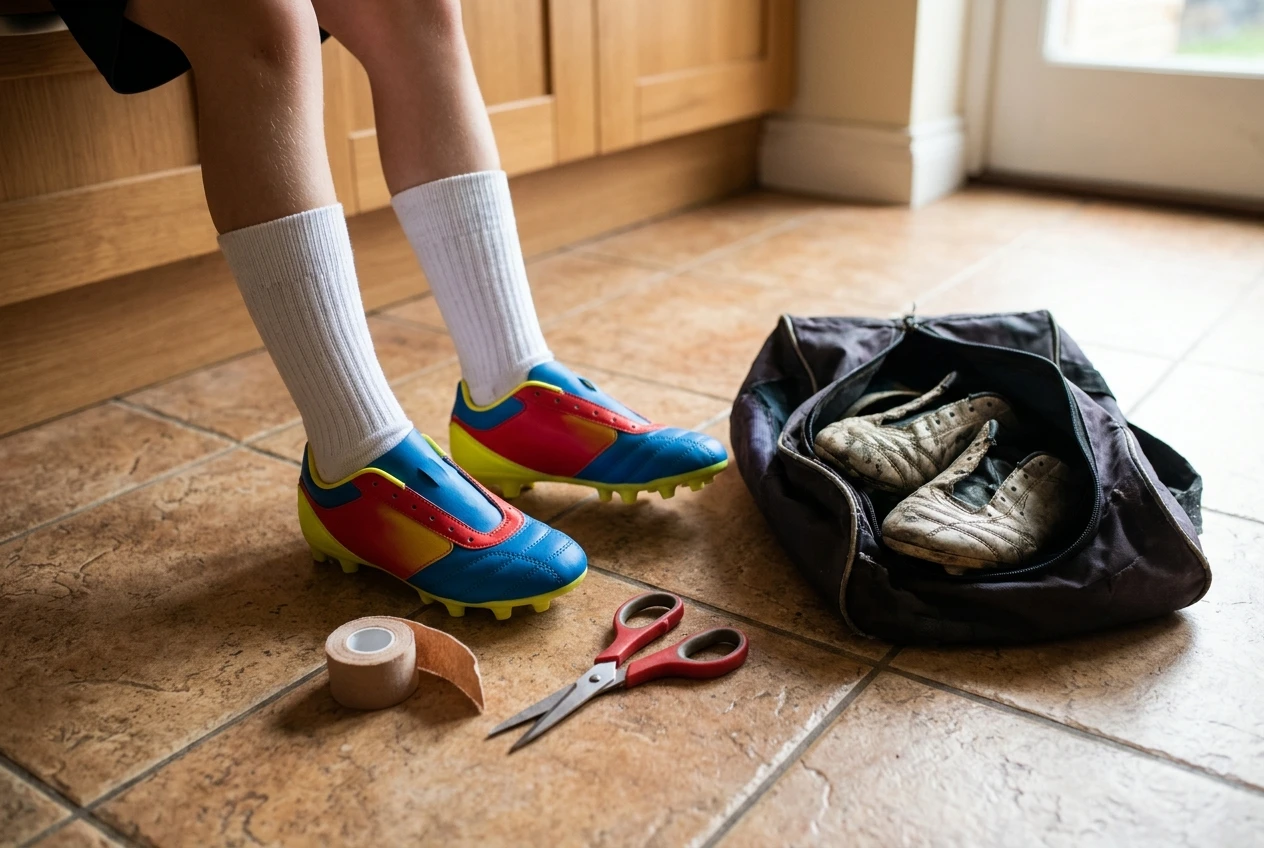
Leather softens and shapes faster than most synthetics, so expect different timelines depending on the upper. After each session, take the socks off and check the feet. Red spots at the heel, the little toe or the sides tell you where friction is building. A small piece of moleskin or tape over that spot can help while the cleat softens, and adjusting the lacing sometimes solves the problem on its own.
For a longer walkthrough, see how to break in new soccer cleats. Keep the old pair in the bag for the first few outings, in case the new ones hurt on game day.
When to replace them: spotting a growth spurt before the toes do
Children rarely announce that their cleats are too small. They just start complaining about one specific spot, or play more tentatively. Watch for these signs:
- Toes touching the front when they stand with laces tied.
- Fresh red marks along the sides or the little toe after play.
- Socks wearing thin at the toes or sides faster than before.
- A heel that starts to feel cramped or hangs out of the back of the cleat.
- Reluctance to put the cleats on.
Repeat the thumb-width check regularly, and retrace the foot at the start of each season or whenever the complaints begin. Growth is uneven, so a child can go months with no change and then need a bigger pair quickly. Passing cleats down is also risky when the previous owner had a narrower foot, because the worn shape rarely suits the next child.
Ready to shop?
Check current prices and available widths for the cleats in this guide on Amazon, since stock and width options change often. If you only want the short list, read the quick three-pick version of this topic.