Synthetic vs Leather Soccer Cleats: How Each Material Plays, Wears and Fits
Last Updated on October 17, 2026 by
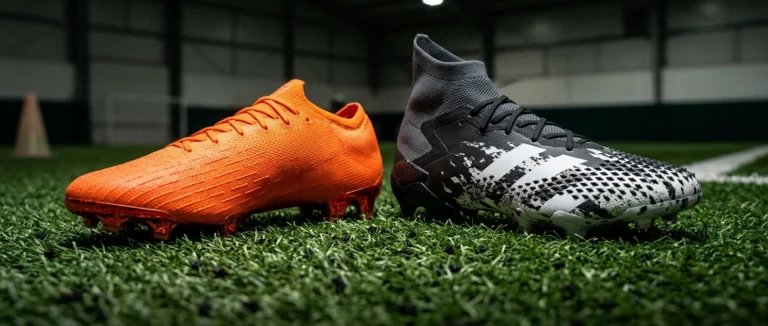
Soccer cleat uppers fall into two groups: natural leather and synthetic materials. Everything else about the decision follows from how each group is made. Leather is animal skin that has been tanned and finished. Synthetic uppers are manufactured fabrics and coated films, usually polyurethane-based, sometimes combined with a knit layer or a textured skin.
What leather and synthetic uppers actually are (and why “leather” isn’t one thing)
Leather cleats are not all alike, and the species and grade of the hide matter. Kangaroo leather is thin, soft and strong for its weight, which is why it is the traditional choice for lightweight, high-touch cleats. Calfskin is thicker and more substantial, usually with a bit less give. Cheaper cleats sold as “leather” often use split or corrected leather, which is a lower grade with a coated surface, and it behaves more like a synthetic than like a premium hide.
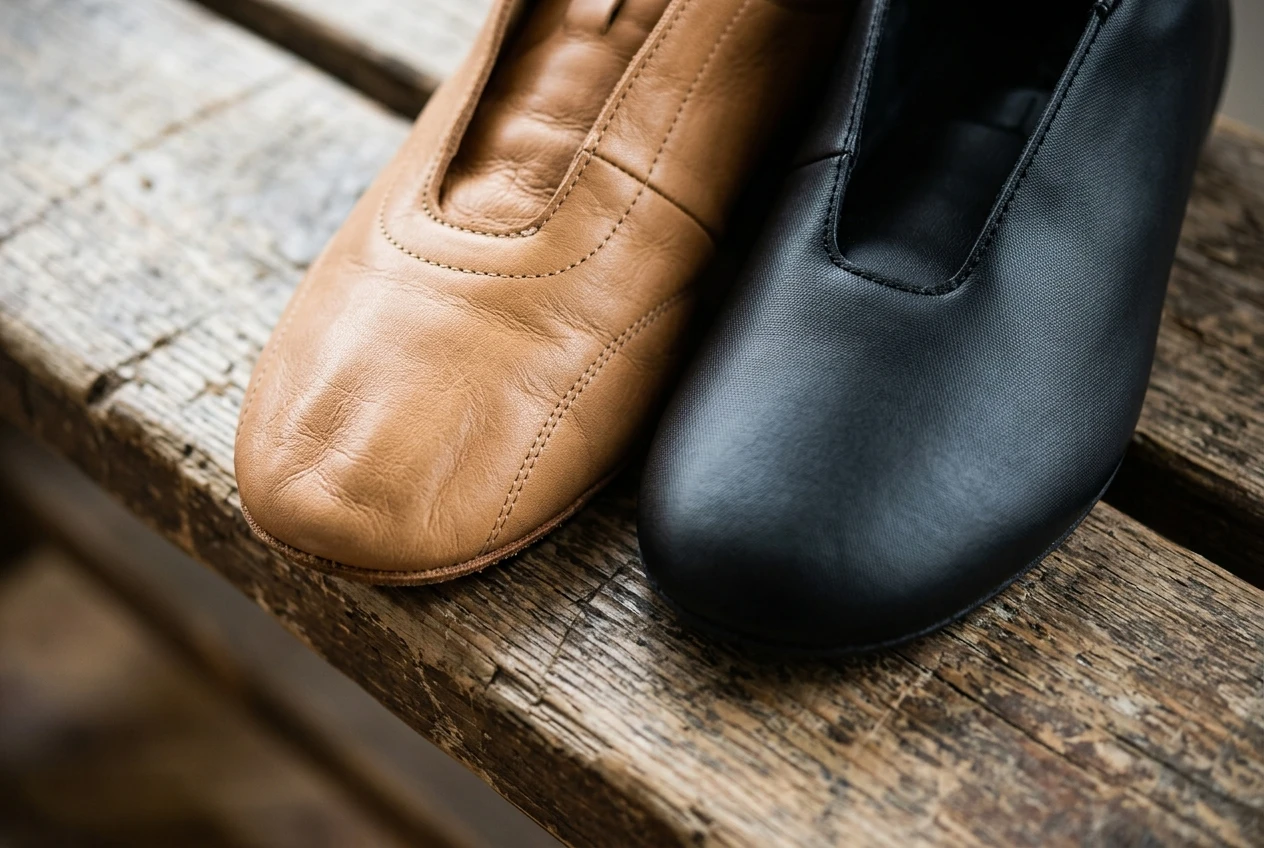
Synthetic uppers vary just as much. A basic coated material is stiff and wipes clean. A more advanced one has a textured skin for grip, a knit inner sock for a snug fit, or layered construction that adds structure where the foot needs it. The label alone tells you very little, so check the product description for the specific material.
The useful question is therefore which kind of leather and which kind of synthetic. Comparing a premium kangaroo cleat to a budget synthetic, or a budget “leather” cleat to a premium knit, will lead you to the wrong conclusion about the materials themselves.
Touch and feel on the ball: where each material genuinely differs
Soft, thin leather gives a direct, quiet contact with the ball. Because the hide is thin and flexible, it deadens the ball a little on first touch and lets you feel where the ball sits against your foot. That is the main reason many midfielders and technical players prefer it.
Synthetic uppers have closed much of that gap. Modern ones are thin, and many have textured surfaces that add friction on the ball. The contact feels different, though. A synthetic upper often feels firmer and slightly more springy on a pass or shot, and some players describe it as more “responsive” and less “cushioned.” Neither is better in the abstract. It depends on what you want your first touch to do.
If you place great value on feeling the ball for short passing, receiving and close control, thin leather is the safer starting point. If you mostly want a consistent strike surface and fast, direct play, a good synthetic will feel fine and some players prefer it. For a closer look at touch in a specific style of cleat, our test of the best laceless soccer cleats for touch covers first contact in detail.
Fit and stretch: why leather molds and synthetic holds its shape
Leather is a natural fiber structure that stretches under heat and pressure, and it does so unevenly. Where your foot pushes against it, such as the bunion area, the toe box and the sides of the forefoot, the material gradually gives and settles into your foot’s shape. Kangaroo leather stretches the most. A pair that feels tight on day one can fit like it was made for you after a few weeks.
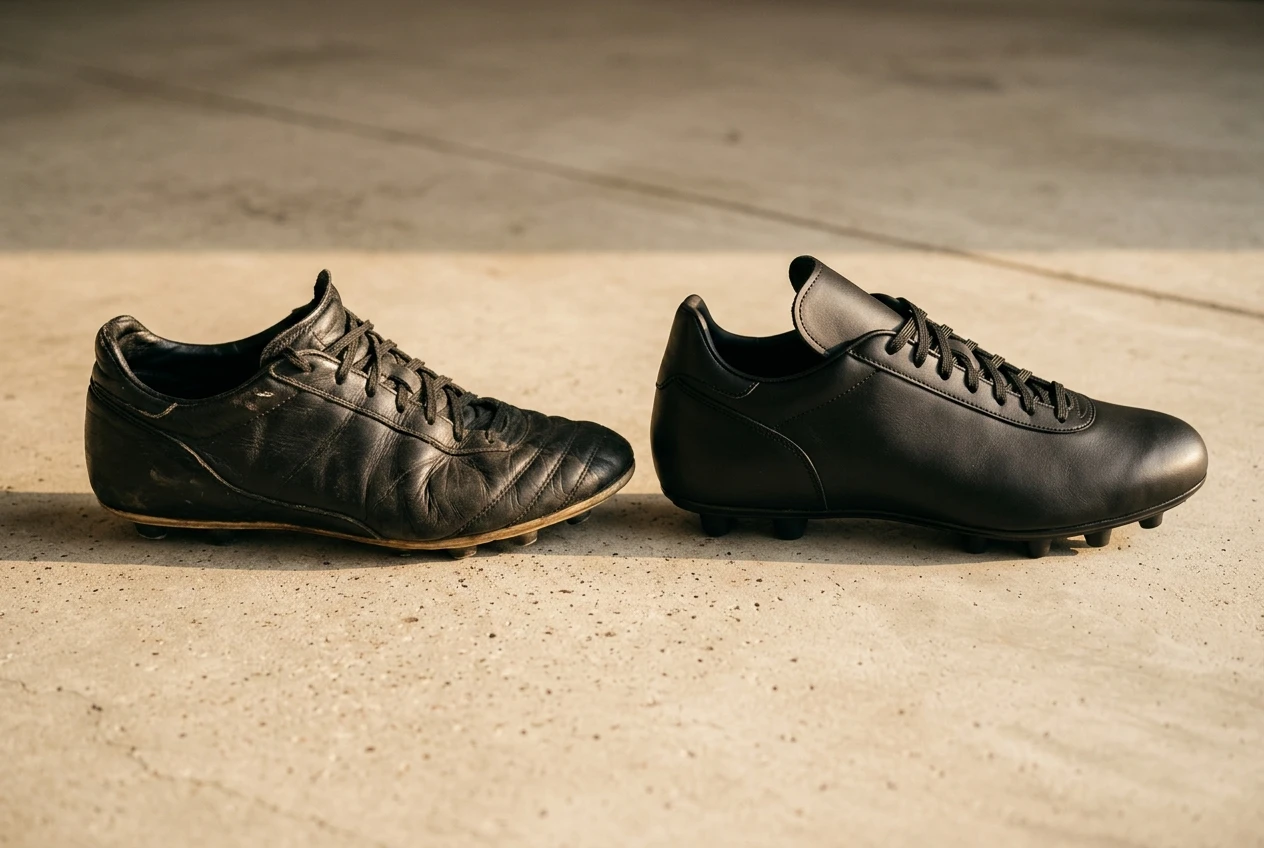
This has two consequences. First, you should buy leather snug, because it will loosen. Second, it needs a break-in period, so do not wear a new pair for the first time in a match. Our guide on how to break in new soccer cleats walks through that process.
Synthetic uppers are made to a set shape and keep it. What you feel in the store is what you will feel in month three, with only a little give. That makes them easier to size, and it means a pair that is too tight will stay too tight. They suit players who want a ready-to-play fit and who are willing to try several models to find the one whose shape matches their foot.
Stretch also matters for growing feet. A youth player may outgrow a pair well before it has finished molding, so the benefit of leather’s shaping is partly lost. Because the sizing logic differs between brands, it is also worth reading about soccer cleat size versus shoe size before you order.
Wet pitches, turf and heat: how each material handles conditions
Untreated natural leather absorbs water. In rain or on dewy grass, a leather upper gets heavier, softer and sometimes slightly looser, and then dries stiff if it is not cared for. Some leather cleats have a water-repellent finish that slows this, but the protection fades with use.
Synthetic uppers absorb very little water, so they stay close to their dry weight and dry quickly. If you play in regular rain, on wet fields, or in a climate where the pitch is rarely dry, this is a clear practical advantage.
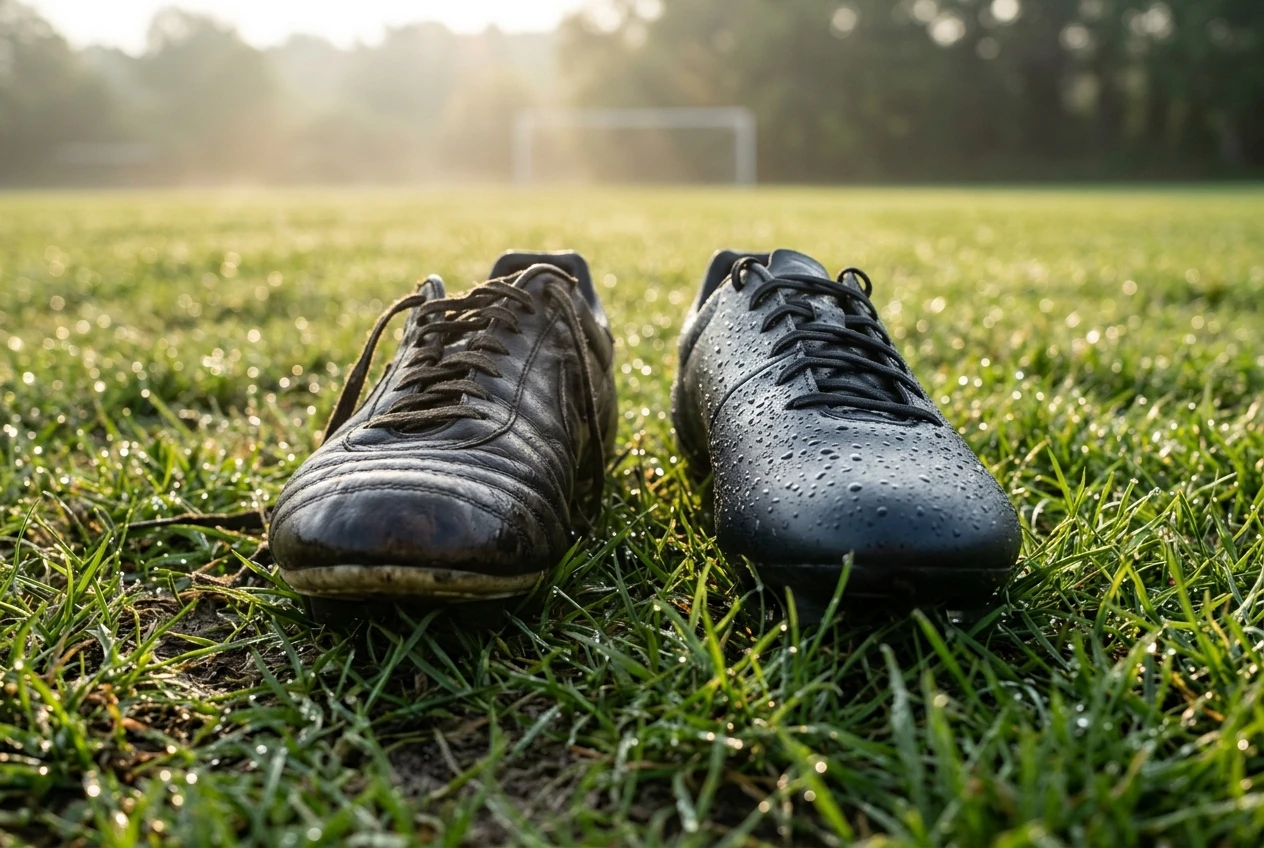
Surface matters too. Artificial turf is abrasive, and it tends to wear down natural leather faster than natural grass does, especially along the toe and the sides. Synthetic uppers usually tolerate that abrasion better. If most of your games are on turf, the sole plate matters as much as the upper, and our comparison of cleats for turf versus natural grass covers that side of the decision.
Heat is the one area where leather often has the edge. Natural leather breathes better than a solid coated synthetic, so it tends to feel cooler and less clammy in warm weather. Perforated and knit synthetics narrow the difference, but a plain coated upper can get hot.
Durability and care: what a season of use does to each
Leather is generally durable if you look after it, and it fails slowly. Thin kangaroo leather can scuff, thin out and eventually tear at high-wear spots, particularly for players who strike the ball often with the same part of the foot. Thicker calfskin holds up longer in rough conditions.
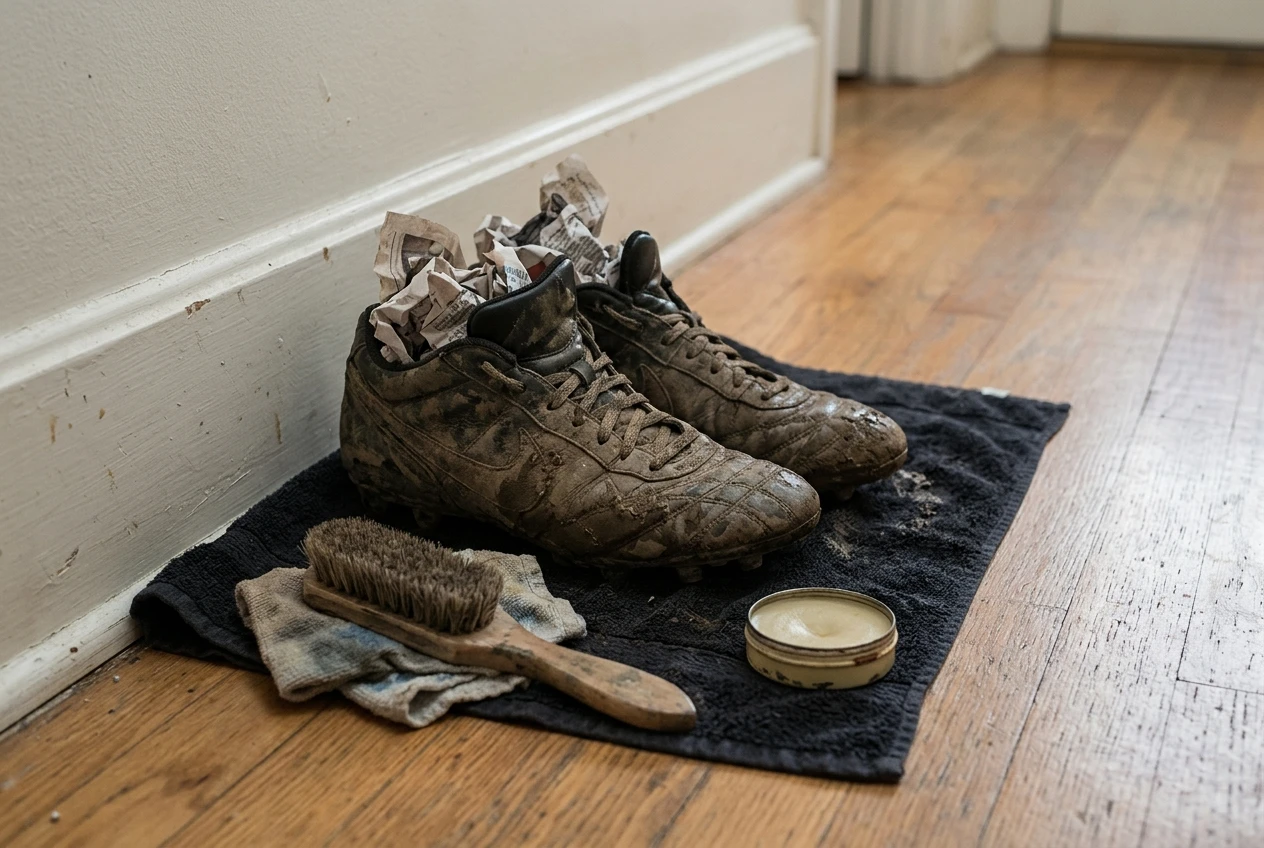
Care is where leather asks more of you:
- Brush off mud and grass soon after the match, then wipe with a damp cloth.
- Dry the cleats at room temperature, away from radiators and direct sun, because heat can crack the leather.
- Stuff them with paper to hold their shape while they dry.
- Apply a leather conditioner occasionally so the hide does not dry out.
Synthetic cleats need less. You can usually wipe them clean and leave them to dry. The usual failure points are different: the coating can peel or crack at flex points, seams can separate, and the sole can detach from the upper. A synthetic upper rarely stretches out of shape, but when it fails, it tends to fail in a way that cannot be repaired.
Whichever you buy, a pair you rotate with another lasts longer than one worn daily. Letting a pair dry fully between sessions benefits both materials.
Weight, price and who each material is really for
Weight depends more on construction than on material. Thin kangaroo leather is very light when dry, and knit synthetic uppers can be lighter still. A thick leather upper or a heavily layered synthetic one will weigh more. Because leather gains water weight in the rain, a synthetic that stays near its dry weight can be the lighter option on a wet day.
Price follows a similar pattern. Premium kangaroo leather is usually among the more expensive materials, while basic synthetics anchor the lower end of the range. There are also expensive synthetics with advanced construction, and affordable leather, so price alone will not tell you what you are getting. If budget is the main constraint, our list of soccer cleats under $100 shows what is available at that level.
In broad terms, leather suits players who value touch, fit and a custom feel and who will put in the care. Synthetic suits players who want low maintenance, consistent fit and resistance to wet and abrasive conditions.
Which one to buy: a pick by player type, position and surface
Use these as starting points, then adjust for your own foot and your own games.
Recreational adult on grass, one or two games a week. Choose whichever fits your foot best. Leather will feel more comfortable after break-in. A synthetic will be easier to look after if you do not want to think about care.
Midfielder or playmaker who relies on touch. Leather, especially a soft, thin type, gives the most direct feel for receiving and passing.
Winger or striker who prioritizes speed and a firm strike. A light synthetic or knit is a sound choice, and many players in these positions prefer the firmer feel. Leather is equally valid if you prefer the touch.
Defender or goalkeeper facing rough contact. Durability and protection matter more than feel, so a thicker leather or a sturdy synthetic is usually the more practical choice. If ankle support is a priority, there is separate advice on that in our guide to soccer cleats for ankle support.
Youth player who is still growing. Synthetic is usually the practical pick. It needs no break-in and costs less to replace when feet grow, and the main benefit of leather, molding to a stable foot, is lost if the cleats are outgrown within a season.
Mostly artificial turf. Synthetic holds up better against abrasion. If you prefer leather, accept that it will wear faster and keep a second pair for grass.
Wet climate or frequent rain. Synthetic keeps its weight and shape. Leather is workable if it has a water-repellent finish and you dry it carefully afterward.
Wide or narrow feet. Leather’s stretch can help a snug but not impossible fit. If the shape of a synthetic cleat does not match your foot, no amount of wear will change it, so try before you buy.
Ready to choose? Read our guide to the best kangaroo leather soccer cleats if leather is your pick, or how to pick soccer cleats to narrow down the rest of your decision.